Tag: technology

  • Breaking the Silence: Advancements in Mental Health Awareness and Solutions in 2026

    How Support Groups Boost Mental Well-Being | Zivanza

    In recent years, mental health has transformed from a largely stigmatized topic to a critical component of public health discussions. As we step into 2026, the focus on mental health awareness and solutions has never been more prominent. With an increasing number of individuals affected by mental health issues, the need for effective interventions and awareness campaigns is crucial.

    Rise in Mental Health Awareness

    According to the World Health Organization, the prevalence of mental health disorders has risen by 25% globally since 2020, exacerbated by the lingering effects of the COVID-19 pandemic. This has prompted a surge in mental health campaigns worldwide, emphasizing the importance of early detection and intervention.

    Innovative Solutions in Therapy

    In response to the growing demand for mental health services, innovative solutions have emerged. Dr. Emily Chen, a clinical psychologist at the National Institute of Psychological Health, highlights the advancements in teletherapy. “Online therapy platforms have become essential in reaching individuals who otherwise might not seek help due to geographical or social barriers,” she explains.

    Moreover, virtual reality (VR) therapy is gaining traction as a viable treatment option. A recent study published in the Journal of Mental Health Technology found that VR therapy can significantly reduce symptoms of anxiety and PTSD by providing immersive, controlled environments for patients.

    The Role of Artificial Intelligence

    Artificial intelligence (AI) is also playing a transformative role in mental health solutions. AI-driven applications are being utilized to detect early signs of mental disorders through analysis of social media patterns and language use. Dr. John Harris, a leading AI researcher, notes, “AI tools can offer personalized mental health support, providing users with immediate coping strategies and alerting human professionals when necessary.”

    Community-Based Initiatives

    In addition to technological advancements, community-based initiatives are pivotal in promoting mental health. Grassroots organizations are fostering environments where open dialogue about mental health is encouraged. These initiatives aim to dismantle stigma and build supportive networks.

    Sarah Lopez, coordinator of the Mental Wellness Collective, underscores the importance of these efforts: “Community support can empower individuals to seek help and share their experiences without fear of judgment.”

    The Path Forward

    As we continue to prioritize mental health, it is essential to integrate these solutions into existing healthcare systems. This includes ensuring equitable access to mental health services and educating the public about the importance of mental well-being. As 2026 progresses, the collaboration between technology, healthcare professionals, and communities holds the promise of a more mentally healthy society.

    With continued innovation and awareness, there is hope that mental health will receive the attention and resources it deserves, ultimately improving the quality of life for millions worldwide.

  • The Quantum Leap: Exploring the Future of Quantum Computing in 2026

    Quantum computers are here — but why do we need them and what ...

    In January 2026, the realm of quantum computing is more than just a scientific curiosity; it’s a burgeoning industry poised to redefine the landscape of technology and information processing. As tech giants and startups alike race to harness its capabilities, quantum computing is no longer a distant dream but an emerging reality with profound implications.

    The Quantum Advantage

    Quantum computing offers a quantum leap in processing power by utilizing quantum bits or qubits, which can represent and store information in multiple states simultaneously. This capability significantly outpaces classical computers in solving complex problems. Dr. Emily Chen, a leading researcher at the Quantum Computing Institute, explains, “The potential for quantum computing to solve problems in minutes that would take classical computers millennia is not just theoretical. We’re seeing practical applications emerging in fields like cryptography, material science, and artificial intelligence.”

    Industry Investment and Progress

    In 2025 alone, global investment in quantum computing exceeded $10 billion, a testament to its anticipated impact. Companies such as IBM, Google, and Microsoft, alongside emerging startups, have made significant strides. Google recently claimed a major breakthrough with its 256-qubit processor, a move that could accelerate quantum supremacy—the point at which quantum computers outperform classical ones in meaningful tasks.

    “Quantum computing is at the cusp of changing the way we approach data security and complex simulations,” said Raj Patel, CEO of QuantumTech Innovations. “Our latest algorithms are paving the way for more efficient drug discovery processes and renewable energy solutions.”

    Challenges and Considerations

    Despite its promise, quantum computing faces several hurdles. Maintaining qubit stability, known as coherence, remains a major challenge. Quantum systems are highly sensitive to environmental disturbances, which can lead to computational errors. Furthermore, the development of practical quantum algorithms is still in its infancy.

    “The path to widespread quantum computing is fraught with scientific and engineering challenges,” notes Dr. Sarah Lee, a quantum physicist at MIT. “However, the pace of innovation and collaboration across the globe is encouraging. If these challenges can be addressed, the possibilities are endless.”

    Looking Ahead

    As quantum computing continues to evolve, its implications for cybersecurity, data analysis, and even climate modeling are expected to be transformative. Many experts believe that the next decade will see quantum computing mature from a niche technology to a critical tool that could redefine industries.

    Governments and educational institutions are also ramping up efforts to prepare a new generation of quantum-savvy professionals. Initiatives to integrate quantum computing into curriculums are underway, aiming to equip students with the skills needed to operate and innovate in this field.

    Conclusion

    As we advance into 2026, the excitement surrounding quantum computing is palpable. While challenges remain, the relentless pursuit of innovation and investment suggests that quantum computing will soon transcend its current experimental phase, heralding a new era of technological advancement. For industries and individuals alike, staying informed and prepared for this quantum leap is not just advisable—it’s imperative.

  • 5G’s Maturation Paves the Way for 6G Innovations

    5G Communication Technology of Internet Network

    As the world embraces the capabilities of 5G networks, the technology industry is already setting its sights on the next frontier—6G. With a projected rollout by the early 2030s, 6G promises to redefine connectivity, blending unprecedented data speeds with advanced computing to support innovations like holographic communication and ultra-responsive virtual reality.

    The Current State of 5G

    Since its introduction, 5G has revolutionized telecommunications, offering faster data speeds, reduced latency, and increased connectivity. According to a report by the Global Mobile Suppliers Association, 5G networks are now available in over 70 countries, covering approximately 60% of the world’s population. This rapid expansion has paved the way for smart city applications, autonomous vehicles, and enhanced mobile broadband experiences.

    “5G has been a game-changer in telecommunications, providing the necessary infrastructure for the Internet of Things and enhancing mobile capabilities,” said Dr. Emily Chen, a telecommunications expert at the University of California, Berkeley. “However, as with any technology, there is always room for growth and improvement, which is where 6G comes in.”

    What 6G Promises

    While 5G continues to evolve, researchers and industry leaders are already envisioning the possibilities of 6G. This new generation is expected to offer data speeds up to 100 times faster than 5G, with latency reduced to mere microseconds. Such advancements could enable revolutionary applications, including real-time digital twins, advanced telepresence, and full-scale automation in industry and healthcare.

    “6G will not just be an evolution of 5G; it will be a revolution,” stated Prof. Hiroshi Tanaka, a leading researcher at the Tokyo Institute of Technology. “The integration of artificial intelligence and machine learning with 6G networks will create a seamless interface between the digital and physical worlds, opening up new horizons for innovation.”

    Challenges and Considerations

    Despite the promising capabilities of 6G, several challenges must be addressed. The development of 6G technology requires significant investment in infrastructure and research. Additionally, there are concerns about spectrum availability, cybersecurity, and the environmental impact of deploying such expansive networks.

    “As we advance towards 6G, it’s crucial to consider the ethical implications and ensure that the technology is developed sustainably and securely,” highlighted Anil Gupta, a technology policy analyst at TechInsight. “Collaboration among governments, industries, and academia will be key to overcoming these challenges.”

    The Road Ahead

    The journey towards 6G is well underway, with major technological hubs like North America, Europe, and Asia spearheading research and development efforts. The International Telecommunication Union has already begun outlining the framework for 6G standards, and various pilot projects are expected to commence by 2028.

    As the world anticipates the dawn of 6G, the focus remains on maximizing the potential of 5G while laying the groundwork for the next generation of connectivity. With its promise of transformative applications and capabilities, 6G is set to shape the future of technology and redefine the way we interact with the world.

  • AI and Machine Learning Breakthroughs Reshape Industries in 2026

    AI in Data Analysis: How Artificial Inteligence Enhances Analytics?

    As we step into 2026, the landscape of artificial intelligence and machine learning has undergone remarkable transformations. With groundbreaking innovations emerging from research labs worldwide, these technologies are poised to redefine industrial operations, enhance decision-making processes, and introduce new paradigms of efficiency across various sectors.

    Revolutionizing Healthcare with AI

    The healthcare industry continues to be a major beneficiary of AI advancements. This year, machine learning algorithms have significantly improved diagnostic accuracy, particularly in detecting diseases at early stages. According to a recent study published by the Journal of Medical AI, early diagnosis of cancers using AI algorithms has reached an accuracy rate of 95%, a notable improvement from 85% in 2023.

    Dr. Emily Chen, a leading AI researcher at the Institute of Health Technologies, emphasized the potential of these advancements. “AI-driven diagnostics are not just about accuracy; they’re about accessibility. With the democratization of AI tools, we’re seeing faster and more cost-effective solutions reaching under-resourced regions,” said Dr. Chen.

    AI’s Role in Financial Services

    The financial sector is also experiencing a transformative phase. AI-driven algorithms are now widely used for risk assessment, fraud detection, and personalized banking solutions. A report by FinTech Insights reveals that the integration of AI in financial services has reduced fraud-related losses by 40% compared to figures from 2024.

    “The ability of AI to analyze vast datasets and detect anomalies has been a game-changer for the financial industry,” noted Raj Patel, CTO of SecureFinance Inc. “This not only enhances security but also allows for more personalized customer experiences.”

    AI in Manufacturing and Supply Chain Management

    Manufacturing and supply chain operations are also being reshaped by AI technologies. Predictive analytics and automated processes have led to a 30% increase in operational efficiency, according to a study by the Global Manufacturing Institute. These improvements are crucial as companies strive to meet the growing demand while maintaining sustainability.

    “We’ve reached a point where AI is integral to predictive maintenance and quality control,” explained Sophie Nguyen, a senior analyst at the Industrial AI Summit. “Companies that embrace these technologies are seeing substantial benefits in terms of reduced downtime and improved product quality.”

    The Ethical Considerations of AI

    While the advancements are promising, they also raise ethical concerns. The growing reliance on AI prompts discussions around data privacy, algorithmic biases, and the potential displacement of jobs. Industry leaders are advocating for a balanced approach that fosters innovation while ensuring ethical standards are upheld.

    “It’s crucial that as we advance, we also address the ethical implications of AI deployment,” urged Dr. Marcus Lee, Chair of the AI Ethics Council. “Transparent AI systems, regulatory oversight, and inclusive policies are essential to harnessing AI’s potential responsibly.”

    Conclusion

    The breakthroughs in AI and machine learning in 2026 are undeniably setting the stage for a more efficient and innovative future. As these technologies continue to evolve, the challenge remains to leverage their capabilities responsibly, ensuring they benefit society as a whole.

  • Remote Work: Transforming Business Landscapes in 2026

    https://cdn.prod.website-files.com/67335b6d593f94fe7242baf5/6753101a6c5e0126e350ab11_digital-workplace-1680x840-1.jpeg

    The dawn of 2026 marks a significant milestone in the ongoing evolution of remote work, a trend that has redefined business operations globally. What began as a temporary solution during the pandemic has now solidified into a permanent fixture in the corporate world, with far-reaching implications for employers and employees alike.

    Remote Work: A New Standard

    According to a recent report by Global Workplace Analytics, approximately 30% of the global workforce now operates remotely on a full-time basis. This shift is not merely a response to crises but a strategic move embraced by businesses seeking to attract top talent and increase productivity. “Remote work has become a cornerstone of modern business strategy,” says Dr. Elena Martinez, a leading expert in organizational behavior. “Companies are leveraging flexible work arrangements to enhance employee satisfaction and reduce overhead costs.”

    Technological Advancements Fueling Change

    The transformation of remote work is intrinsically linked to technological advancements. Innovations in cloud computing, collaboration tools, and cybersecurity have made it feasible for businesses to operate seamlessly without geographical constraints. Platforms like Microsoft Teams and Zoom have evolved into comprehensive solutions that support a wide range of business activities, from daily operations to strategic planning.

    “The role of technology in facilitating remote work cannot be overstated,” asserts Alex Chen, CTO of a Silicon Valley tech firm. “We are witnessing the convergence of AI and machine learning with remote work tools, enhancing everything from virtual meetings to project management.”

    Impact on Business Culture

    The shift to remote work is also reshaping corporate culture. Companies are increasingly focusing on fostering a sense of community and engagement among remote teams. Strategies such as virtual team-building activities and regular check-ins are becoming standard practice. A survey by Deloitte found that 60% of employers are investing in digital tools to maintain company culture and employee morale in a remote setting.

    Moreover, the flexibility inherent in remote work allows for a more inclusive workforce, enabling individuals with disabilities or those living in remote areas to participate in the global economy. “Remote work is a great equalizer,” notes Sarah Thompson, a human resources consultant. “It opens doors for a diverse range of talents who might otherwise be excluded from traditional office environments.”

    Challenges and Considerations

    Despite its benefits, remote work poses challenges that businesses must address. Issues such as employee isolation, time management, and cybersecurity risks require proactive strategies. Companies are investing in training programs to equip managers with the skills needed to lead remote teams effectively.

    Furthermore, the legal and regulatory landscape is evolving to accommodate this new work paradigm. Governments worldwide are revisiting labor laws and tax policies to address the complexities of a distributed workforce.

    Looking Ahead

    As we move further into 2026, the future of remote work looks promising but demands continuous adaptation. Businesses that embrace this transformation and address its challenges head-on are likely to thrive in the new era of work.

    In the words of Dr. Martinez, “The remote work model is not just a trend; it’s the future of work. Companies that invest in the right technologies and foster a supportive culture will lead the way in this new landscape.”

  • Cybersecurity Trends and Emerging Threats in 2026: What You Need to Know

    Is The Enterprise Security Operations Center Effective?

    As we step into 2026, the cybersecurity landscape continues to evolve at a breakneck pace, with emerging threats challenging both businesses and individuals alike. Experts warn that the sophistication of cyberattacks has reached new heights, necessitating innovative defensive strategies and heightened awareness.

    AI-Driven Attacks: A Double-Edged Sword

    Artificial intelligence, once a tool primarily for defense, is now being leveraged by cybercriminals to launch more sophisticated attacks. ‘AI has become a double-edged sword,’ notes Dr. Emily Chen, a cybersecurity expert at the Cyber Defense Institute. ‘Attackers are using AI to automate tasks such as vulnerability scanning and spear-phishing, making their campaigns more effective and harder to detect.’

    According to a recent report by CyberSecurity Ventures, AI-driven cybercrime is expected to cost the global economy over $10 trillion annually by the end of the decade, underlining the urgent need for AI-powered defense mechanisms.

    Supply Chain Vulnerabilities: A Growing Concern

    Supply chain attacks have surged as a preferred method for cybercriminals seeking to exploit interconnected networks. In 2025 alone, attacks on supply chains increased by 37%, as reported by the Global Cybersecurity Association. These attacks often involve infiltrating a trusted supplier to access a target network, bypassing traditional security defenses.

    ‘Organizations must prioritize supply chain security by implementing rigorous vetting processes and continuous monitoring,’ advises Jack Martinez, Chief Security Officer at SecureTech Solutions.

    The Rise of Quantum Computing: Preparing for the Future

    Quantum computing is on the horizon, promising unparalleled computational power. While its full potential is yet to be realized, experts emphasize the need for quantum-resistant cryptography. ‘The advent of quantum computers could render current encryption methods obsolete,’ warns Dr. Ravi Patel, a quantum computing researcher. ‘It’s crucial that we develop quantum-safe solutions now to protect future communications.’

    Human Element: Still the Weakest Link

    Despite advancements in technology, human error remains a significant vulnerability. Social engineering attacks, such as phishing, continue to exploit unsuspecting users. In 2025, 85% of reported data breaches involved a human element, according to the Data Breach Investigations Report by TechSecure Group.

    Training and awareness programs are essential in mitigating these risks. ‘Education is key,’ says Sarah Lewis, Director of Cyber Awareness at CyberGuard. ‘We must empower individuals to recognize and respond to potential threats effectively.’

    Conclusion: A Call to Action

    The cybersecurity landscape of 2026 presents both challenges and opportunities. As threats become more sophisticated, the need for comprehensive and proactive strategies is more critical than ever. Businesses and individuals must stay informed and adapt to these changes to safeguard their digital assets.

    As cyber threats continue to evolve, collaboration between governments, industries, and cybersecurity professionals remains vital in developing robust defenses against the digital threats of tomorrow.

  • AI and Machine Learning Breakthroughs Usher in a New Era in 2026

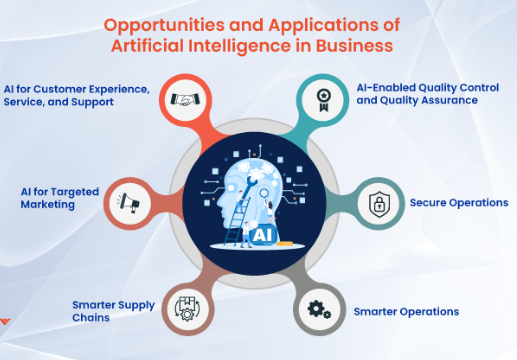
    AI in Business Operation: Maximizing Efficiency

    As we step into 2026, artificial intelligence (AI) and machine learning are not just buzzwords but transformative forces reshaping the global landscape. From revolutionizing healthcare diagnostics to redefining financial modeling, the breakthroughs in these fields are proving to be game-changers.

    Healthcare Revolutionized with AI

    The healthcare industry is witnessing unprecedented advancements thanks to AI. Algorithms capable of analyzing complex medical data are now aiding in early disease detection and personalized treatment plans. According to Dr. Emily Carter, a leading AI researcher at the National Health Institute, “AI-driven diagnostics have reduced the error rate by 30% in identifying critical illnesses such as cancer.” This progress is not only enhancing patient outcomes but also alleviating the burden on healthcare professionals.

    Financial Sector Embraces Intelligent Automation

    In finance, AI is streamlining operations and enhancing decision-making processes. Financial institutions are leveraging machine learning models to predict market trends with higher accuracy. John Liu, Chief Analyst at Global Finance Insights, notes, “Machine learning algorithms are delivering predictions with a 95% accuracy rate, enabling smarter investment decisions and risk management.” This level of precision is reshaping how financial strategies are formulated and executed.

    AI Ethics and Regulation: A Growing Focus

    With AI’s growing influence, the conversation around ethics and regulation is gaining momentum. Policymakers and technologists are collaborating to ensure that AI deployment is both ethical and beneficial. Sarah Thompson, a policy advisor at TechReg, emphasizes, “It’s crucial to have robust regulations that prevent misuse while promoting innovation. We are seeing a global push towards establishing these frameworks.”

    Education and Workforce Transformation

    The rise of AI is also impacting education and workforce dynamics. Educational institutions are incorporating AI into curricula to prepare students for a tech-driven future. Meanwhile, companies are investing in reskilling programs to equip their workforce with AI competencies. “By 2030, we expect over 50% of jobs to require some level of AI proficiency,” states Michael Green, Director of the Institute for Future Work.

    Looking Ahead

    As AI continues to evolve, its potential to solve complex problems and drive innovation is limitless. Experts agree that the key to maximizing AI’s benefits lies in fostering collaboration across sectors and ensuring that ethical considerations keep pace with technological advances.

    In conclusion, 2026 marks a pivotal year in the journey of AI and machine learning. As these technologies continue to integrate into various aspects of life, the world watches closely to see how they will shape a smarter, more efficient future.

  • 5G and 6G: The Next Frontier in Global Connectivity

    6G technology concept with ultra-fast communication, AI-integrated networks, and industrial automation. Smart infrastructure combining computing and communication creates secure environments for the Internet of Senses.

    In the ever-evolving landscape of telecommunications, 5G technology has reached a pivotal moment as it becomes more widely integrated into global networks. However, as we move into 2026, the industry is already looking ahead to 6G, the next frontier in connectivity that promises to redefine how we interact with the digital world.

    The Current State of 5G

    5G networks have expanded rapidly since their initial rollout, with global adoption now covering over 70% of urban areas, according to the latest report from the International Telecommunications Union (ITU). The technology has delivered faster download speeds, reduced latency, and facilitated a surge in Internet of Things (IoT) applications.

    “5G has fundamentally changed how we think about connectivity,” says Dr. Emily Tran, a leading telecommunications analyst at TechInsights. “It’s not just about faster smartphones; it’s about creating smart cities, enabling autonomous vehicles, and transforming industries from healthcare to manufacturing.”

    Looking Ahead to 6G

    Even as 5G continues to roll out, researchers and industry leaders are already focused on 6G, which is expected to debut in the early 2030s. This next-generation network aims to offer speeds up to 100 times faster than 5G, with near-instantaneous connectivity and enhanced security features.

    “6G is not just an incremental upgrade. It’s a complete overhaul of the network architecture,” explains Dr. Rajiv Kumar, director of Future Networks at Global Telecom Consortium. “We’re talking about integrating AI into the network itself, enabling seamless connectivity across physical and virtual worlds.”

    Challenges and Opportunities

    Despite the promising potential of 6G, several challenges remain. The development of new infrastructure, significant investment, and the creation of international standards are critical hurdles that need to be overcome.

    “The transition to 6G will require a collaborative effort across borders and industries,” notes Sarah Lee, a telecommunications policy expert at the Center for Digital Economy. “We need a global approach to ensure equitable access and avoid the digital divide that plagued earlier technologies.”

    On the opportunity side, 6G is expected to unlock innovative applications such as holographic communications, digital twins, and advanced remote healthcare solutions, further blurring the lines between reality and the digital realm.

    Conclusion

    As we stand on the cusp of another technological revolution, the journey from 5G to 6G represents a significant leap in the world of connectivity. With the promise of unprecedented speed and reliability, 6G has the potential to redefine how we live, work, and interact globally. The next few years will be critical as stakeholders across the spectrum collaborate to turn this vision into reality.

  • The Remote Work Revolution: Transforming Business Landscapes in 2026

    Hybrid meetings: Equipping your meeting spaces to be more collaborative,  flexible, and equitable for all - DisplayNote

    The remote work revolution, which began as a response to the global pandemic, has evolved into a permanent fixture within the business world as we enter 2026. With technology advancing rapidly and employee expectations shifting, companies are reimagining how work is done, leading to a profound transformation across industries.

    Technology as the Catalyst

    The role of technology in facilitating remote work cannot be overstated. According to a 2025 report by the Global Workplace Analytics, over 60% of companies worldwide have adopted hybrid work models, with remote work now forming a crucial part of their operations. Cloud computing, AI-driven project management tools, and enhanced cybersecurity measures are enabling businesses to maintain productivity and security from afar.

    “Technology is the backbone of remote work. The advancements we’ve seen in just the past few years have made it possible for teams to collaborate seamlessly across continents,” says Dr. Emily Tran, a leading analyst at the Tech Innovation Institute.

    Changing Workforce Dynamics

    The remote work model is not just about technology; it is also about catering to the evolving needs and expectations of the workforce. Millennials and Gen Z, who now make up a significant portion of the labor force, prioritize flexibility and work-life balance, demanding more remote work opportunities. A 2025 survey by the Society for Human Resource Management (SHRM) found that 75% of employees consider remote work options a top priority when choosing an employer.

    “The modern employee is looking for more than just a paycheck. They want autonomy and the ability to integrate work with their lifestyle,” comments Sarah Jenkins, a human resources consultant based in New York.

    Impact on Urban and Rural Economies

    The shift to remote work is also having a substantial impact on urban and rural economies. As more employees move away from expensive urban centers, there is a significant redistribution of economic activity. Smaller towns and rural areas are witnessing a revival, with local businesses benefiting from an influx of remote workers.

    “We’re seeing a renaissance in rural communities as remote workers bring new vitality and demand to these areas,” notes John Miller, a rural economic development expert.

    Challenges and Opportunities

    Despite the benefits, the remote work transformation is not without its challenges. Companies are grappling with issues such as maintaining company culture, ensuring data security, and managing remote teams effectively. However, these challenges also present opportunities for innovation and growth.

    “Businesses that can adapt to these challenges by embracing new technologies and flexible work policies will have a competitive edge in the future,” says Dr. Tran.

    The Future of Work

    As remote work continues to shape the business landscape in 2026, companies are finding that adaptability is key. The ability to respond to technological advancements and workforce expectations will determine their success in this new era. As we look to the future, the remote work model is poised to become even more integral to the global economy.

  • Quantum Leap: The Transformative Future of Quantum Computing

    In a world increasingly driven by technology, quantum computing stands on the precipice of transforming industries from cryptography to pharmaceuticals. As of January 2026, investments in quantum research have surged, with experts predicting that the next decade will see quantum computers become as integral to the global economy as traditional computers are today.

    The Rise of Quantum Technology

    Quantum computing, which leverages the peculiarities of quantum mechanics to process information, promises to outperform classical computers in solving complex problems. According to a recent report by the Quantum Computing Report, global spending on quantum technology is set to reach $25 billion by 2030, a significant leap from the $5 billion recorded in 2023.

    “We’re witnessing a paradigm shift,” said Dr. Emily Chen, a leading researcher at the Quantum Institute of Technology. “Quantum computers have the potential to revolutionize areas such as drug discovery, where they can simulate molecular interactions at unprecedented speeds.”

    Applications and Implications

    The applications of quantum computing are vast and varied. In finance, for instance, quantum algorithms could optimize trading strategies far more efficiently than current systems. In the realm of cybersecurity, quantum computers are poised to break existing encryption methods, necessitating new quantum-resistant algorithms.

    “The challenge is twofold: harnessing the power of quantum computing while also safeguarding our digital infrastructure against it,” noted James Li, a cybersecurity expert at SecureTech Labs. “The race is on to develop quantum-safe cryptography before quantum computers become commercially viable.”

    Industry Investments and Collaborations

    Major tech companies are spearheading the charge into the quantum frontier. Google, IBM, and Microsoft have increased their quantum research budgets significantly, while startups like Rigetti and IonQ are rapidly innovating. In December 2025, IBM announced the launch of a 127-qubit quantum processor, marking a significant milestone in quantum capability.

    Collaborations between academia, industry, and governments are also critical. The European Union’s Quantum Technologies Flagship initiative, with a budget of €1 billion, aims to push European countries to the forefront of quantum research and development.

    Challenges Ahead

    Despite the promising advancements, quantum computing faces significant hurdles. The technology remains in its nascent stages, with issues such as error rates and qubit stability posing formidable challenges. “Scalability is a major hurdle,” explained Dr. Raj Patel, a physicist at Quantum Leap Labs. “Building a fault-tolerant quantum computer requires not just technical innovation but also substantial material and financial resources.”

    Furthermore, the ethical implications of quantum computing, particularly in terms of privacy and data security, remain a topic of intense debate.

    Conclusion

    As we move further into 2026, the landscape of quantum computing continues to evolve rapidly. While the road to widespread adoption is fraught with challenges, the potential benefits are too significant to ignore. As Dr. Chen aptly put it, “Quantum computing is not just an incremental technological advancement; it is a fundamental shift that will redefine the boundaries of what is computationally possible.”